
1. Operation Titanic: How Fake Paratroopers on D-Day Fooled the German Army
In the high-stakes hours leading up to the massive Allied invasion of Normandy, military mastermind leaders relied on more than just raw firepower and troop numbers—they heavily leaned into the art of strategic deception. Among the most brilliant yet unusual World War 2 military strategies ever deployed was the drop of hundreds of dummy paratroopers. This phantom army was meticulously designed to paralyze German communications and sabotage their defensive response to the true beach landings.
The Chaos Before Dawn: June 6, 1944
Before the first light of dawn broke on June 6, 1944, Allied aircraft quietly breached the night skies of occupied France. In total darkness, they released hundreds of parachutes over strategic inland coordinates. To German lookouts on the ground, it appeared as though a catastrophic, full-scale airborne invasion was raining down upon them.
Panic instantly rippled through nearby German command posts. Entire infantry units and mobile reserves were rapidly diverted from the coast and rushed toward these suspected drop zones to engage the enemy.
However, when daylight finally pierced the morning fog, German soldiers were left utterly stunned. Instead of elite Allied troops, the fields and forests were littered with clever decoys crafted out of fabric, rubber, straw, and canvas.
From “Rupert” to “Oscar”: The Evolution of Deception Tactics in Warfare
While dummy soldiers had been experimented with in past conflicts, Allied engineers revolutionized this form of deception tactics in warfare for D-Day:
- The British “Rupert” Dummies: British specialists designed small, human-shaped burlap and fabric figures. Weighted carefully with sand or straw, they were engineered to fall through the sky with the exact realism of a human paratrooper.
- The American “Oscar” Dummies: American designs upgraded the psychological warfare aspect. Advanced models were equipped with explosive charges that, upon hitting the ground, simulated the sounds of intense gunfire, synchronized marching, and shouted combat commands.
Operation Bodyguard and the Secrets of Operation Titanic
As the blueprints for D-Day intensified, Allied commanders recognized that securing victory on the beaches depended on keeping the German military guessing. This massive, multi-layered misinformation campaign was coordinated under a master plan known as Operation Bodyguard.
A critical element of this strategy was Operation Titanic. The mission was simple yet perilous: simulate massive airborne assaults deep inland, far away from the actual Normandy landing sectors.
Commandos and Dummy Drops Working in Tandem
To ensure the illusion was airtight, real flesh-and-blood Allied commandos landed alongside the decoys. Elite teams from the British SAS (Special Air Service) and the Special Operations Executive (SOE) hit the ground carrying explosives, weapons, and advanced sound equipment.
Meanwhile, Royal Air Force (RAF) crews flew highly dangerous, low-altitude missions through heavy anti-aircraft flak to ensure the phantom army landed perfectly on target.
The Strategic Triumph and Its Heavy Cost
The timing of Operation Titanic was flawless, unfolding just hours before Allied infantry stormed the beaches of Normandy.
Believing the main thrust of the invasion was happening inland, German generals ordered vital reserve divisions away from the coast. By the time they realized they were chasing ghosts made of straw and canvas, the real Allied forces had already established a permanent foothold on the shores of Normandy.
Despite its success, this critical piece of WW2 history facts carried a grim price tag:
- Several RAF transport planes were shot down, resulting in the loss of their brave crews.
- A number of SAS operatives who dropped into the decoy zones were captured and unlawfully executed by German forces despite wearing official military uniforms.
2. Angelina Jolie and Brad Pitt Divorce Finalized? The Truth About the Jolie-Pitt Twins’ 18th Birthday Milestone
The ongoing legal saga between Hollywood icons Angelina Jolie and Brad Pitt may finally be reaching its ultimate conclusion. Their youngest children, twins Knox and Vivienne Jolie-Pitt, are set to celebrate their landmark 18th birthday on July 12, 2026. This long-awaited milestone carries immense legal weight, as it is expected to mark the exact date their parents’ nearly ten-year-long, high-profile divorce settlement is officially finalized.
Knox Jolie-Pitt’s New Look and Passion for Martial Arts
While the world’s media remains fixated on the upcoming Angelina Jolie and Brad Pitt divorce update, the twins are busy paving their own paths. Recently, Knox Jolie-Pitt made headlines after paparazzi spotted him during an intense cardio workout session through the streets of Los Angeles alongside a personal fitness trainer. Physical conditioning and athletics have consistently been a cornerstone of his daily lifestyle.
Most notably, Knox has developed a deep expertise in combat sports:
- He undergoes rigorous Muay Thai training multiple times a week.
- On June 6, he showcased his skills by stepping into the ring for an exhibition match.
- He debuted a striking new aesthetic, sporting vibrant orange hair paired with tiger-print fight shorts.
- Global Muay Thai enthusiasts have pointed out that Knox frequently trains in authentic apparel featuring logos from legendary local stadiums in Thailand.
Vivienne’s Birthday Plans and Angelina’s Massive Move Abroad
Simultaneously, Vivienne Jolie-Pitt is focusing on organizing her brother’s upcoming birthday celebrations. However, the twins reaching legal adulthood signifies a major shift for the entire family’s dynamic.
According to prominent media insiders, once the Jolie-Pitt twins’ 18th birthday passes and child custody clauses legally expire, Angelina Jolie is heavily considering a permanent relocation outside of the United States. The Oscar-winning actress reportedly wishes to leave Los Angeles behind to embark on a completely new personal and professional chapter overseas.
3. The Rarest Human Genetic Traits and Their Likelihood: Science Behind Mutations
When we hear about “mutations,” we often think of superhero movies. In reality, however, genetic changes are much more common and real than you might think. Human DNA undergoes subtle variations that give individuals completely unique physical, mental, and intellectual characteristics.
Below is a comprehensive rare human genetic traits list, showcasing the estimated probabilities and characteristics of these fascinating conditions:
1. Psychological & Personality Traits
An individual’s behavior and personality are deeply linked to their biological makeup. Research into the genetics of personality disorders reveals some startling data:
- Sociopathy (Antisocial Personality Disorder):
- Probability: Approximately 1 in 25.
- Characteristics: Individuals often ignore rules, act impulsively, and may harm others without feeling guilt. Research suggests a distinct genetic predisposition to this disorder may exist.
- Psychopathy:
- Probability: Approximately 1 in 100.
- Characteristics: Considered a more severe form of antisocial behavior, it is characterized by a profound lack of empathy, a sense of superiority, and a tendency to manipulate. Historically, examples include certain criminals and leaders of destructive cults.
- Autism Spectrum Disorder:
- Probability: About 1 in 59.
- Characteristics: A developmental disorder that can make it difficult for a person to interact and communicate with others. Symptoms typically appear in early childhood and vary greatly in severity.
2. Physical & Pigmentation Traits
Certain genetic traits directly impact a person’s appearance, eye color, or skin pigmentation:
- Birth of Twins:
- Probability: About 1 in 85.
- Characteristics: Twins can be identical (sharing the same genetic makeup) or fraternal (developing from two different eggs). In incredibly rare cases, double paternity is even possible.
- Vitiligo (White Patches on the Skin):
- Probability: About 1 in 120.
- Characteristics: A condition in which patches of skin lose pigment and become lighter in color. Sometimes, the hair in these patches also lightens. Famous individuals with this condition include singer Michael Jackson and model Winnie Harlow.
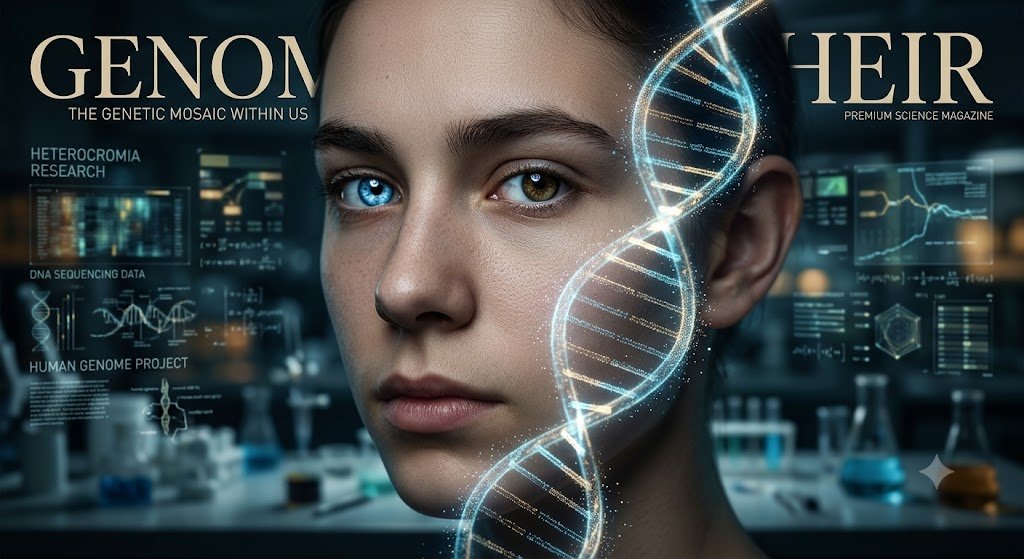
- Heterochromia (Different Eye Colors):
- Probability: About 1 in 167.
- Characteristics: A condition where the eyes are entirely different colors or shades. It can be congenital or develop due to injury or disease. Famous examples include David Bowie, Benedict Cumberbatch, and Mila Kunis.
3. Hereditary Physical Anomalies
Chromosomal variations or unique embryonic development stages can lead to highly unusual structural differences:
- Polydactyly (Extra Fingers or Toes):
- Probability: About 1 in 500.
- Characteristics: The presence of an extra finger or toe, which is usually smaller than the others and can be inherited. It is sometimes surgically removed.
- Down Syndrome:
- Probability: About 1 in 700.
- Characteristics: Caused by the presence of an extra chromosome 21, it is often accompanied by characteristic developmental facial features. The likelihood increases significantly with the mother’s age.
- Polymelia (Extra Limbs):
- Probability: Approximately 1 in 1,700.
- Characteristics: A rare anomaly where a person is born with extra arms or legs. This is often due to complex embryonic development, such as when a conjoined twin fails to fully develop.
- Microcephaly:
- Probability: Approximately 1 in 5,000.
- Characteristics: Characterized by a baby being born with a head that is significantly smaller than normal. The underlying causes may be purely genetic or related to infections during pregnancy.
4. Exceptional Intellectual Capacity
- High IQ:
- Probability: About 1 in 600.
- Characteristics: Intellectual giftedness IQ statistics state that an IQ score above 140 is considered a sign of exceptional, highly rare intellectual ability.